Buy qbot.eu ?
We are moving the project
qbot.eu .
Are you interested in purchasing the domain
qbot.eu ?
domain@kv-gmbh.de · 0541-91531010
Buy qbot.eu ?
How are Latin subjunctive subordinate clauses still translated with the subjunctive?
Latin subjunctive subordinate clauses are still translated with the subjunctive in English to convey the same sense of uncertainty, possibility, or doubt. In English, the subjunctive mood is used to express hypothetical or unreal situations, wishes, recommendations, or demands. Therefore, when translating Latin subjunctive subordinate clauses, the English subjunctive is used to maintain the same mood and meaning of the original Latin sentence. **
Maybe subjunctive or indicative?
The choice between subjunctive or indicative depends on the context of the sentence. The subjunctive mood is used to express doubt, uncertainty, desire, or hypothetical situations, while the indicative mood is used for statements of fact or certainty. To determine whether to use subjunctive or indicative, consider the verb's relationship to reality and whether it is expressing a fact or a possibility. **


Similar search terms for Subjunctive
Top-Angebote
Products related to Subjunctive:
-
Adobe AI Assistant for Acrobat - 1 YearMain requirements -Licence : Acrobat Individual/Teams/Pro or Reader Premium subscription; not standalone. - App: Acrobat desktop (not pre-2024 perpetual versions), Reader desktop/web, or mobile. - Access: Login with Adobe ID; for Reader free, needs admin approval for Premium. Known limitations -Does not work on Acrobat Pro 2020 or 2024 perpetual or Reader 32-bit without updates. - PDFfiles must be59,90 £*Shipping: 0,00 £Secure redirect to the provider
-
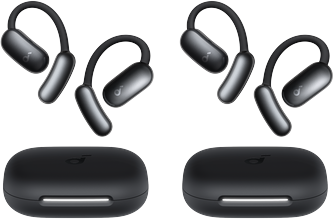
soundcore AeroFit 2 AI Assistant AI Translation for a Connected WorldBulk Headphones, Earbuds, and Speakers for Business >>>>> Stay Comfortable, Stay Aware: With soft materials and a non-invasive design, the earbuds deliver all-day comfort and breathability, keeping you attuned to the world while enjoying music. Free...109,99 $*Shipping: 0,00 $Secure redirect to the provider
-
soundcore AeroFit 2 AI Assistant AI Translation for a Connected WorldBulk Headphones, Earbuds, and Speakers for Business >>>>> Stay Comfortable, Stay Aware: With soft materials and a non-invasive design, the earbuds deliver all-day comfort and breathability, keeping you attuned to the world while enjoying music. Free...109,99 $*Shipping: 0,00 $Secure redirect to the provider
-
soundcore AeroFit 2 AI Assistant AI Translation for a Connected WorldBulk Headphones, Earbuds, and Speakers for Business >>>>> Stay Comfortable, Stay Aware: With soft materials and a non-invasive design, the earbuds deliver all-day comfort and breathability, keeping you attuned to the world while enjoying music. Free...209,98 $*Shipping: 0,00 $Secure redirect to the provider




-
Perhaps, subjunctive or indicative?
The choice between subjunctive or indicative depends on the context of the sentence. The subjunctive mood is used to express hypothetical or uncertain situations, wishes, recommendations, or doubts. On the other hand, the indicative mood is used for statements of fact or certainty. Therefore, if the sentence is expressing a possibility, doubt, or desire, the subjunctive mood would be more appropriate. **
-
Conditional, subjunctive or indicative?
The choice between conditional, subjunctive, or indicative mood depends on the context of the sentence. The conditional mood is used to express a hypothetical situation or a condition that is dependent on something else happening. The subjunctive mood is used to express wishes, recommendations, or possibilities. The indicative mood is used to state facts or ask questions. **
-
What is the use of the present subjunctive and the past subjunctive?
The present subjunctive is used to express desires, doubts, wishes, or hypothetical situations in the present or future. It is often used after certain verbs and conjunctions that indicate uncertainty or subjectivity. The past subjunctive, on the other hand, is used to express desires, doubts, wishes, or hypothetical situations in the past. It is often used in the same way as the present subjunctive, but in reference to past events or situations. Both subjunctive forms are used to convey uncertainty or subjectivity in a sentence. **
-
Are the subjunctive I and the subjunctive II present in all tenses?
No, the subjunctive I and subjunctive II are not present in all tenses. The subjunctive I is only present in the present tense, while the subjunctive II is present in the past tense. The subjunctive I is used to express wishes, suggestions, or hypothetical situations in the present, while the subjunctive II is used to express wishes, suggestions, or hypothetical situations in the past. Each tense has its own specific form of the subjunctive mood. **

'It is strange that + subjunctive'
It is strange that she should be so calm in such a chaotic situation. **
When is the subjunctive used?
The subjunctive is used to express desires, doubts, wishes, possibilities, recommendations, or hypothetical situations. It is often used in dependent clauses following certain verbs or expressions that convey these meanings. The subjunctive mood is used to show uncertainty or subjectivity in a sentence, rather than stating a fact or certainty. It is important to pay attention to the context and the verb that triggers the use of the subjunctive in order to use it correctly. **
Top-Angebote
Products related to Subjunctive:
-
soundcore AeroFit 2 AI Assistant AI Translation for a Connected WorldBulk Headphones, Earbuds, and Speakers for Business >>>>> Stay Comfortable, Stay Aware: With soft materials and a non-invasive design, the earbuds deliver all-day comfort and breathability, keeping you attuned to the world while enjoying music. Free...109,99 $*Shipping: 0,00 $Secure redirect to the provider
-
soundcore AeroFit 2 AI Assistant Open-Ear Headphones, AI Translation BlackAll-Day Comfort, Complete Awareness: Over-ear design and lightweight build frees you from in-ear pressure and a fit that's too tight, ensuring breathable, all-day comfort while keeping you aware of your surroundings when you're listening to music or a podcast. Free AI Translation: Instantly understand 100 languages with accurate two-way translation to make communicating with the world even easier and real-time translation so you understand speeches or meetings no matter where you are. Voice-Controlled Personal AI Assistant: Simply say “Hey Anka” to activate your hands-free personal assistant and control your earbuds and get instant updates just by using your voice. A Comfortable Fit for Every Ear: Double-curved sufrace and innovative 4-level adjustable ear hooks ensure a comfortable, pressure-free fit tailored to over 99% of ear shapes and sizes. Vibrant Bass, Hi-Res Audio: Enjoy deep bass fueled by 20 x 11.5-millimetre racetrack drivers and soundcore's BassTurbo acoustic structure, plus stable, high-resolution audio delivered via Bluetooth 5.4 and LDAC support. Long Playtime with Convenient Wireless Charging: Get up to 8.5 hours of playtime per charge and a total of 35 with the case. A 10-minute charge delivers 3 hours of playtime and wireless charging compatibility enables effortless recharging.74,99 £*Shipping: 0,00 £Secure redirect to the provider
-
Adobe AI Assistant for Acrobat - 1 YearMain requirements -Licence : Acrobat Individual/Teams/Pro or Reader Premium subscription; not standalone. - App: Acrobat desktop (not pre-2024 perpetual versions), Reader desktop/web, or mobile. - Access: Login with Adobe ID; for Reader free, needs admin approval for Premium. Known limitations -Does not work on Acrobat Pro 2020 or 2024 perpetual or Reader 32-bit without updates. - PDFfiles must be59,90 £*Shipping: 0,00 £Secure redirect to the provider
-
soundcore AeroFit 2 AI Assistant AI Translation for a Connected WorldBulk Headphones, Earbuds, and Speakers for Business >>>>> Stay Comfortable, Stay Aware: With soft materials and a non-invasive design, the earbuds deliver all-day comfort and breathability, keeping you attuned to the world while enjoying music. Free...109,99 $*Shipping: 0,00 $Secure redirect to the provider
-
How are Latin subjunctive subordinate clauses still translated with the subjunctive?
Latin subjunctive subordinate clauses are still translated with the subjunctive in English to convey the same sense of uncertainty, possibility, or doubt. In English, the subjunctive mood is used to express hypothetical or unreal situations, wishes, recommendations, or demands. Therefore, when translating Latin subjunctive subordinate clauses, the English subjunctive is used to maintain the same mood and meaning of the original Latin sentence. **
-
Maybe subjunctive or indicative?
The choice between subjunctive or indicative depends on the context of the sentence. The subjunctive mood is used to express doubt, uncertainty, desire, or hypothetical situations, while the indicative mood is used for statements of fact or certainty. To determine whether to use subjunctive or indicative, consider the verb's relationship to reality and whether it is expressing a fact or a possibility. **
-
Perhaps, subjunctive or indicative?
The choice between subjunctive or indicative depends on the context of the sentence. The subjunctive mood is used to express hypothetical or uncertain situations, wishes, recommendations, or doubts. On the other hand, the indicative mood is used for statements of fact or certainty. Therefore, if the sentence is expressing a possibility, doubt, or desire, the subjunctive mood would be more appropriate. **
-
Conditional, subjunctive or indicative?
The choice between conditional, subjunctive, or indicative mood depends on the context of the sentence. The conditional mood is used to express a hypothetical situation or a condition that is dependent on something else happening. The subjunctive mood is used to express wishes, recommendations, or possibilities. The indicative mood is used to state facts or ask questions. **
Similar search terms for Subjunctive
-
soundcore AeroFit 2 AI Assistant AI Translation for a Connected WorldBulk Headphones, Earbuds, and Speakers for Business >>>>> Stay Comfortable, Stay Aware: With soft materials and a non-invasive design, the earbuds deliver all-day comfort and breathability, keeping you attuned to the world while enjoying music. Free...109,99 $*Shipping: 0,00 $Secure redirect to the provider
-
soundcore AeroFit 2 AI Assistant AI Translation for a Connected WorldBulk Headphones, Earbuds, and Speakers for Business >>>>> Stay Comfortable, Stay Aware: With soft materials and a non-invasive design, the earbuds deliver all-day comfort and breathability, keeping you attuned to the world while enjoying music. Free...209,98 $*Shipping: 0,00 $Secure redirect to the provider
-
soundcore AeroFit 2 AI Assistant AI Translation for a Connected WorldBulk Headphones, Earbuds, and Speakers for Business >>>>> Stay Comfortable, Stay Aware: With soft materials and a non-invasive design, the earbuds deliver all-day comfort and breathability, keeping you attuned to the world while enjoying music. Free...209,98 $*Shipping: 0,00 $Secure redirect to the provider
-
soundcore AeroFit 2 AI Assistant AI Translation for a Connected WorldBulk Headphones, Earbuds, and Speakers for Business >>>>> Stay Comfortable, Stay Aware: With soft materials and a non-invasive design, the earbuds deliver all-day comfort and breathability, keeping you attuned to the world while enjoying music. Free...209,98 $*Shipping: 0,00 $Secure redirect to the provider
-
What is the use of the present subjunctive and the past subjunctive?
The present subjunctive is used to express desires, doubts, wishes, or hypothetical situations in the present or future. It is often used after certain verbs and conjunctions that indicate uncertainty or subjectivity. The past subjunctive, on the other hand, is used to express desires, doubts, wishes, or hypothetical situations in the past. It is often used in the same way as the present subjunctive, but in reference to past events or situations. Both subjunctive forms are used to convey uncertainty or subjectivity in a sentence. **
-
Are the subjunctive I and the subjunctive II present in all tenses?
No, the subjunctive I and subjunctive II are not present in all tenses. The subjunctive I is only present in the present tense, while the subjunctive II is present in the past tense. The subjunctive I is used to express wishes, suggestions, or hypothetical situations in the present, while the subjunctive II is used to express wishes, suggestions, or hypothetical situations in the past. Each tense has its own specific form of the subjunctive mood. **
-
'It is strange that + subjunctive'
It is strange that she should be so calm in such a chaotic situation. **
-
When is the subjunctive used?
The subjunctive is used to express desires, doubts, wishes, possibilities, recommendations, or hypothetical situations. It is often used in dependent clauses following certain verbs or expressions that convey these meanings. The subjunctive mood is used to show uncertainty or subjectivity in a sentence, rather than stating a fact or certainty. It is important to pay attention to the context and the verb that triggers the use of the subjunctive in order to use it correctly. **
* All prices are inclusive of VAT and, if applicable, plus shipping costs. The offer information is based on the details provided by the respective shop and is updated through automated processes. Real-time updates do not occur, so deviations can occur in individual cases. ** Note: Parts of this content were created by AI.